


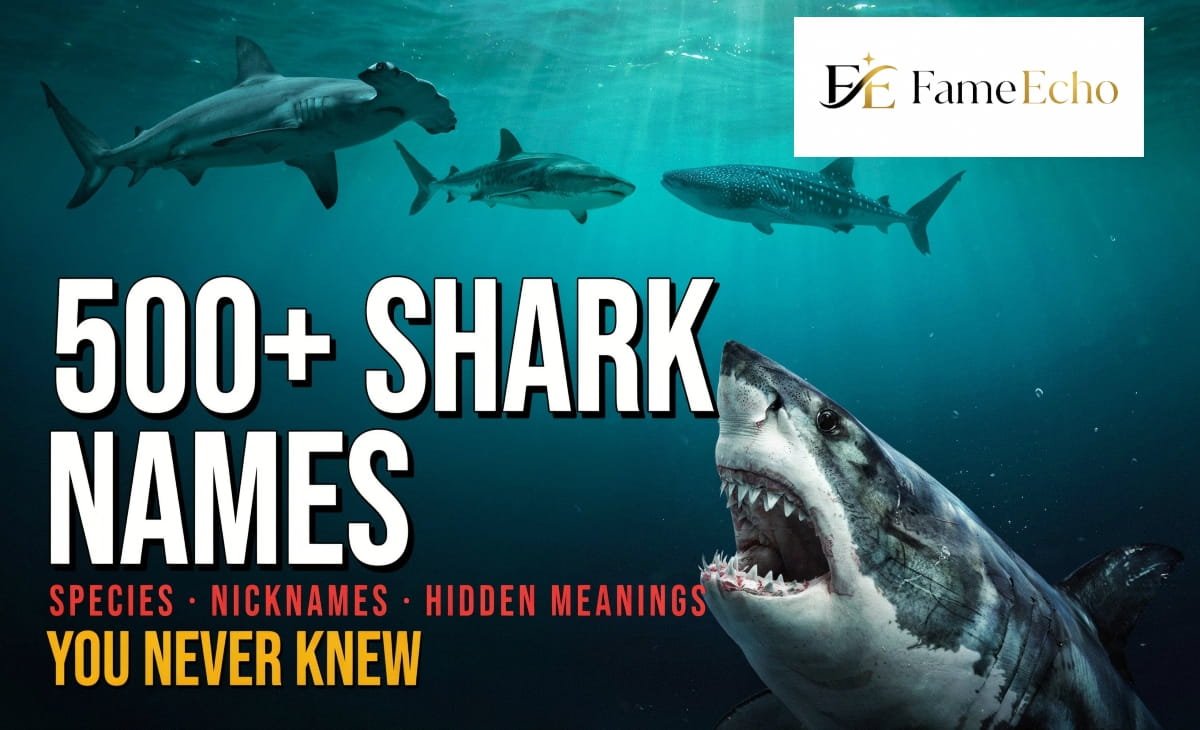

Names are how we understand the world. When a marine biologist identifies a new species, the chosen name becomes the anchor for every study, conservation effort, and public debate that follows. Most of us use common names daily. However, common names vary wildly by region and language. That variation causes real confusion. For example, “sand shark” means one thing in Australia. In the United States, it refers to a completely different species altogether.
Scientific names solve this problem. They derive from Latin or Greek, and every species receives one universal identity. Researchers around the world use the same name, regardless of language.
Furthermore, shark names directly affect conservation outcomes. Misidentification in fisheries records, restaurant menus, and wildlife trade databases has driven the overfishing of many vulnerable species. For instance, when Australian customers order “flake” at a fish-and-chip shop, they often eat gummy shark (Mustelus antarcticus). That species faces serious population pressure, partly because a generic trade name hides its true identity from consumers.
In short, a name carries power. Therefore, understanding shark names is not just a matter of biology — it is a matter of survival for these animals.
Quick Facts Table
| Fact | Detail |
| Total shark species | 500+ described worldwide |
| Oldest shark ancestor | ~450 million years ago |
| Largest shark | Whale Shark (Rhincodon typus) — up to 12 meters |
| Most dangerous (to humans) | Bull Shark (Carcharhinus leucas) |
| Longest-lived shark | Greenland Shark — est. ~272–512 years (oldest ~392 yrs) |
| Most famous fictional shark | “Jaws” (1975 film) |
| Most-watched shark character | Baby Shark — billions of YouTube views |
| Naming authority | International Code of Zoological Nomenclature (ICZN) |
The Most Famous Shark Names
Great White Shark (Carcharodon carcharias)
No shark name carries more cultural weight than “great white.” The name is almost perfectly descriptive. These animals grow genuinely large — females can exceed 6 meters. Moreover, their undersides are a stark, bright white. The genus name Carcharodon comes from the Greek karcharos (sharp, jagged) and odous (tooth). It is a fitting tribute to the serrated, triangular teeth that define this species. The species epithet carcharias repeats the same root, doubling down on the shark’s most iconic feature.
Colloquially, Australians and South Africans call great whites “white pointers.” That name references the pointed snout, not the belly color. In surfing communities, people call them “the man in the grey suit.” That eerie euphemism makes the animal sound both threatening and oddly businesslike.
Hammerhead Sharks (Family Sphyrnidae)
The hammerheads owe their name to the most obvious reason possible. Their laterally flattened head — called a cephalofoil — looks exactly like a hammer. The Greek genus name Sphyrna (hammer) says the same thing. Additionally, individual species carry names reflecting subtle differences. The great hammerhead (Sphyrna mokarran) is the largest. The scalloped hammerhead (Sphyrna lewini) has an undulating front edge on its cephalofoil. The smooth hammerhead (Sphyrna zygaena), in contrast, has a straighter profile.
Tiger Shark (Galeocerdo cuvier)
Juvenile tiger sharks wear dark, vertical stripes along their flanks. Those stripes inspired the common name. As the shark matures, the stripes fade — but the name sticks for life. The species honors Georges Cuvier, a French naturalist who first described it in 1822. Galeocerdo derives from the Greek galeos (a type of shark) and kerkos (tail), referencing the distinctive asymmetrical tail fin. Tiger sharks rank among the most dangerous to humans. They eat almost anything — researchers have found license plates, tires, and even a suit of armor inside their stomachs.
Bull Shark (Carcharhinus leucas)
The bull shark is blunt-snouted, aggressive, and built like a tank. It earned its common name honestly. These sharks are arguably the most dangerous to humans in terms of proximity, because they tolerate fresh water. Bull sharks travel far up rivers. Researchers have found them in the Mississippi River, the Amazon, and Lake Nicaragua. The species epithet leucas means “white” in Greek, referring to the pale underside. Around the world, however, the bull shark goes by many names. South Africans call it the “Zambezi shark.” Central Americans call it the “Lake Nicaragua shark.” Same animal, different names, same serious reputation.
Whale Shark (Rhincodon typus)
The whale shark earns its name through sheer size. It is the largest fish on Earth. The species can reach up to 18 meters in length, though most individuals measure between 4 and 12 meters. That colossal scale prompts the obvious comparison to whales. Rhincodon combines the Greek rhyne (rasp) and odon (tooth), describing the tiny, rasp-like teeth that line its jaws by the hundreds — teeth so small they play no role in feeding. Despite its intimidating scale, the whale shark poses no threat to humans. It feeds exclusively by filter-feeding on plankton and small fish. Divers describe encounters with it as life-changing. In the Philippines, local fishermen traditionally called it butanding — a name still widely in use today and now attached to conservation festivals across the archipelago.
Nurse Shark (Ginglymostoma cirratum)
The origin of “nurse shark” is genuinely debated among researchers. One theory holds that the name comes from the sucking sound these sharks make when they hunt prey on the ocean floor — a noise compared to a nursing infant. Another theory suggests the name corrupts an older word, “nusse,” a type of cat shark. The genus Ginglymostoma translates from Greek as “hinged mouth.” That name refers to the flexible jaws these sharks use to slurp crustaceans and fish from reef crevices.
Sharks Named After Their Appearance
Nature offers an extraordinary range of shark body plans. Consequently, many shark names celebrate visible features directly:
- Leopard Shark (Triakis semifasciata) — Dark saddle-like markings cover a silvery body. This California coastal species looks exactly like its big-cat namesake.
- Zebra Shark (Stegostoma tigrinum) — Juvenile zebra sharks carry bold black-and-white stripes. Adults develop spots instead. The species epithet tigrinum actually means “tiger” in Latin and refers to the juvenile’s striped pattern — the same banded look that also inspired the common name “zebra shark.” To add to the confusion, adults are sometimes called “leopard sharks” in Australia due to their spotted appearance. The species was long known as Stegostoma fasciatum, but taxonomists reverted to the earlier name tigrinum (described by Forster in 1781) following priority rules.
- Wobbegong Sharks (Order Orectolobiformes) — These ornately patterned carpet sharks live in Australian and Asian waters. Their common name comes from an Aboriginal Australian word believed to mean “shaggy beard,” describing the elaborate skin flaps around their heads.
- Cookiecutter Shark (Isistius brasiliensis) — This shark takes precise, circular plugs of flesh from much larger animals, including whales, dolphins, and military submarines. The genus Isistius honors the Egyptian goddess Isis. The common name honors a kitchen tool.
- Sawshark (Order Pristiophoriformes) — Sawsharks carry a long, blade-like rostrum lined with lateral teeth. They slash through schools of fish with it. Note: sawsharks and sawfish are entirely different animals.
Sharks Named After Places
Geographic naming is a long tradition in zoology. Sharks follow this tradition faithfully:
- Galapagos Shark (Carcharhinus galapagensis) — Researchers first described this species from specimens collected in the Galapagos archipelago, though it actually lives circumglobally around oceanic islands.
- Caribbean Reef Shark (Carcharhinus perezi) — The name tells you exactly where to look.
- Borneo Shark (Carcharhinus borneensis) — Scientists have spotted this species almost exclusively around Borneo. It may already be functionally extinct.
- Greenland Shark (Somniosus microcephalus) — This shark inhabits the frigid North Atlantic and Arctic. It also holds a remarkable record: a 2016 study using radiocarbon dating of eye lenses estimated the oldest specimen at approximately 392 years (with a range of 272–512 years), making Greenland sharks the longest-lived vertebrates known to science.
Sharks Named After People
Eponymous names — those honoring specific individuals — appear throughout animal taxonomy. Several sharks carry them:
- Goblin Shark (Mitsukurina owstoni) — The genus honors Kakichi Mitsukuri, a Japanese zoologist. The species honors Alan Owston, a Yokohama-based natural history collector who provided the first specimen to researchers.
- Whitley’s Whaler Shark — This species honors Gilbert Percy Whitley, an Australian ichthyologist who described dozens of fish species throughout the twentieth century.
- Celebrity-named species — In recent years, researchers have named newly discovered deep-sea sharks after musicians, scientists, and conservation advocates. These naming decisions generate media attention. That attention, in turn, raises public awareness of otherwise obscure species.
Pet Shark Names: What Aquarium Owners Choose
Keeping sharks as pets is a niche but passionate hobby. Most aquarium sharks belong to smaller, reef-safe species — the banded bamboo shark (Chiloscyllium punctatum) or the epaulette shark (Hemiscyllium ocellatum) are common choices. Owners tend to choose names that play on the shark’s fierce reputation while acknowledging its more manageable size.
Most popular pet shark names:
| Name | Why People Love It |
| Jaws | The eternal classic from Spielberg’s 1975 film |
| Chomper | Playful, descriptive, and accurate |
| Finn | A simple ocean-themed pun |
| Sharky | Affectionate and straightforward |
| Bruce | From Finding Nemo, named after Spielberg himself |
| Blade | For sharks with a menacing look |
| Luna / Pearl / Cleo | Elegant names that subvert the fierce reputation |
| Toothy / Bitey | Honest, if unimaginative |
Additionally, some aquarists who keep bamboo sharks or wobbegongs give their sharks entirely human names — “Gerald” or “Margaret,” for example. The ironic contrast between the name and the animal has become something of a tradition in the hobby.
Famous Fictional Shark Names
Sharks have prowled pop culture for decades. Along the way, they have collected a roster of memorable fictional names:
- Jaws — The great white antagonist of Peter Benchley’s 1974 novel and the Spielberg film. Neither the book nor the film ever officially names the shark. Nevertheless, the title became the character. The crew nicknamed the animatronic shark “Bruce,” after Spielberg’s lawyer.
- Bruce, Anchor, and Chum — The trio of reformed sharks in Finding Nemo (2003). Bruce is a great white. Anchor is a hammerhead. Chum is a mako. All three have pledged to stop eating fish.
- Lenny — The vegetarian great white shark in Shark Tale (2004), voiced by Jack Black.
- Baby Shark — Perhaps the most recognized shark name among children today. The song has generated billions of YouTube views and spawned plush toys, TV shows, and theme park attractions.
- Sharkboy — The half-shark, half-human protagonist of The Adventures of Sharkboy and Lavagirl (2005).
- Left Shark — The internet-famous backup dancer from Katy Perry’s 2015 Super Bowl halftime show. The performer inside the costume improvised enthusiastically and out of sync. As a result, “Left Shark” became a name, a meme, and a permanent piece of internet history.
Scientific Naming Conventions for Sharks
The International Code of Zoological Nomenclature (ICZN) governs the formal naming of all animal species, including sharks. Every species receives a two-part Latin or Latinized name: genus and species epithet. Researchers may name new species after:
- A physical characteristic (color, shape, size, texture)
- A behavior or preferred habitat
- A geographic location
- A person (suffix -i for men, -ae for women)
- A mythological figure or concept
The process is permanent. Once a name enters the scientific record, changing it requires a formal petition and a ruling from the ICZN. As a result, revisions sometimes take decades. The zebra shark is one such case: the species was widely known as Stegostoma fasciatum for many years. However, taxonomists later confirmed that Johann Forster described it as Squalus tigrinus in 1781 — two years before Hermann’s fasciatus description. Under priority rules, the older name wins. Today the accepted name is Stegostoma tigrinum, though many older references still carry fasciatum.
The Conservation Weight of a Name
Names shape perception. Perception, in turn, shapes policy. Conservation campaigners have long understood this connection. The push to foreground the word “shark” in discussions of shark fin soup, for instance, is entirely deliberate. Using the word “shark” connects consumers directly to the living animal behind the product.
Similarly, campaigners in the UK and Australia have challenged the practice of labeling shark meat as “flake,” “huss,” or “rock salmon” in supermarkets. Those generic labels hide the animal’s identity and allow consumers to buy shark meat unknowingly.
Research in conservation psychology supports this strategy. Species with evocative, memorable names attract more public sympathy and more conservation funding. The “great white shark” benefits enormously from its dramatic name. In contrast, less charismatic species — the tope shark, the piked dogfish, the brown smoothhound — struggle to generate the same emotional response. Yet these species often face comparable or greater conservation threats.
Consequently, the names scientists choose for newly discovered species carry real stakes. A name that resonates with the public can mean the difference between a species that receives protection and one that disappears unnoticed.
Conclusion
Shark names are far more than simple labels. They are windows into history, culture, science, and storytelling. From the Greek roots of Carcharodon carcharias to the Aboriginal origins of “wobbegong,” from “Bruce” the animatronic film prop to “Baby Shark” the viral earworm, every name reflects our relationship with these extraordinary animals.
That relationship includes fear, fascination, and — increasingly — a genuine commitment to protection. Over 500 shark species share our oceans. New ones surface every year from the deep sea and remote reefs. Each new name added to the scientific record is a small but meaningful act of acknowledgment: this creature exists, it matters, and it deserves to be known.
These animals survived five mass extinctions. The least we can do is learn their names.
Continue reading with this related story: 80+ Lunar Names From Around the World: Meanings, Origins & the Best Picks for 2026
Frequently Asked Questions
What is the most famous shark name in the world?
“Jaws” is arguably the most famous shark name globally, thanks to the 1975 Spielberg film. Among real species, the “great white shark” (Carcharodon carcharias) is the most recognized name worldwide.
How many shark species exist, and do all of them have names?
Scientists have described over 500 shark species so far. All described species carry both a scientific name and at least one common name. However, researchers continue to discover new species in deep-sea and remote habitats, so the total count keeps growing.
What are some cool and unique shark names for pets?
Popular pet shark names include Jaws, Bruce, Finn, Chomper, and Luna. Some aquarists prefer ironic human names like Gerald or Margaret for smaller species such as bamboo sharks or epaulette sharks.
Why do sharks have two names — a common name and a scientific name?
Common names vary by region and language, which causes confusion. Scientific names follow the International Code of Zoological Nomenclature (ICZN) and remain consistent across all languages worldwide. This consistency helps researchers, conservationists, and regulators communicate without ambiguity.
Can a shark be named after a person?
Yes. Taxonomy allows researchers to honor individuals by naming newly discovered species after them. The goblin shark’s genus (Mitsukurina) honors Japanese zoologist Kakichi Mitsukuri. In recent years, scientists have also named new shark species after musicians, public figures, and conservation advocates to generate media attention.
What is the difference between a shark’s common name and its trade name?
A common name is the everyday name used by the public — “bull shark,” for example. A trade name is what fisheries and restaurants use to sell the product, and it often differs entirely. Bull sharks may be sold as “reef fish” or unlabeled “shark fillet.” Gummy sharks appear as “flakes” in Australia. These trade names obscure the animal’s identity and make sustainable purchasing difficult for consumers.
Are there sharks with the same common name but different scientific names?
Yes — this is one of the biggest problems in shark identification. “Sand shark,” “whaler shark,” “reef shark,” and “blue shark” all refer to different species depending on the country or region. That is precisely why scientists rely on binomial scientific names, which remain fixed regardless of geography or language.
